
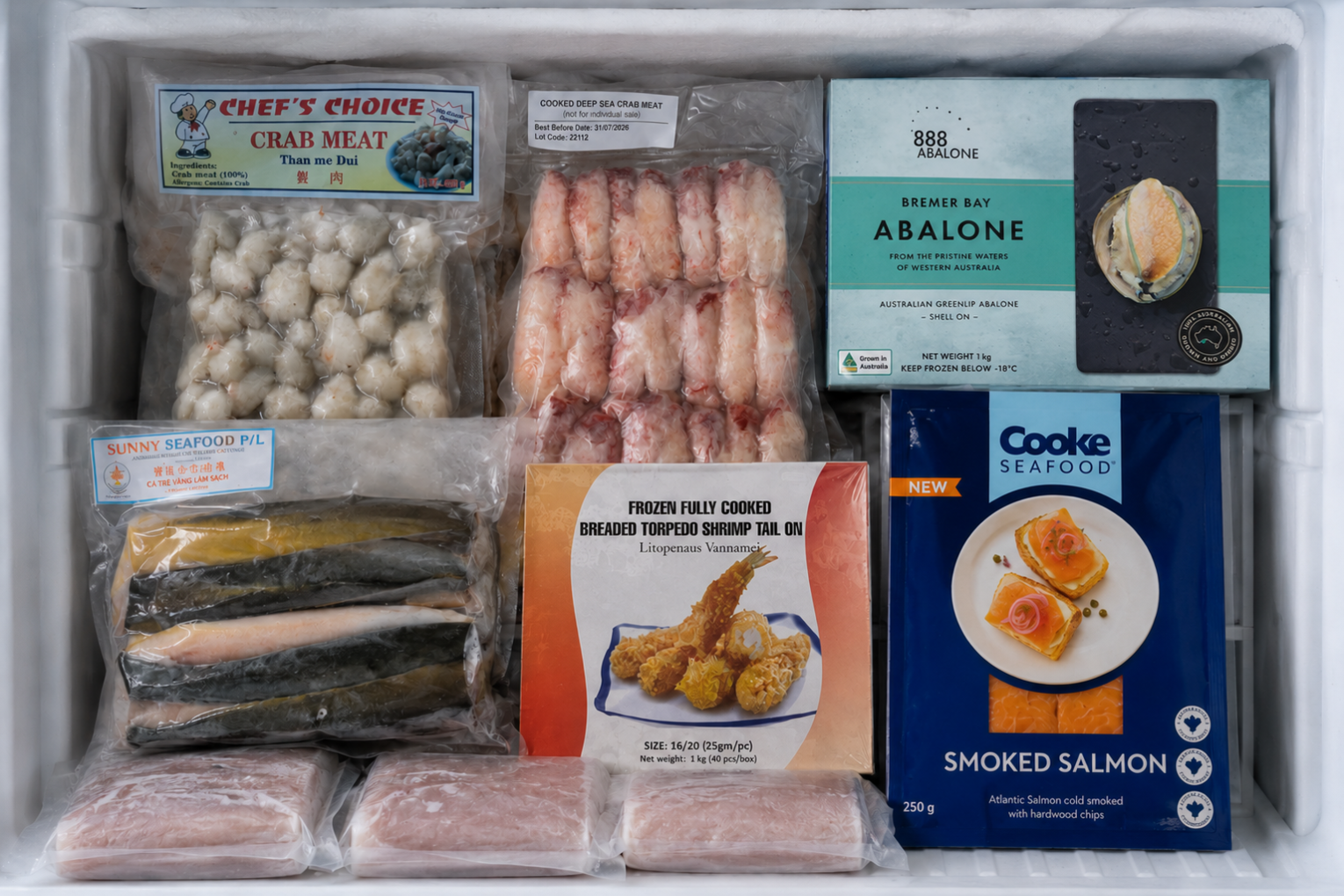
Getting the most out of your frozen seafood starts long before it hits the pan. This guide covers simple seafood storage tips for the freezer and fridge that protect flavour, texture and food safety.
Quick Answer
Store seafood well sealed at -18°C or below, towards the back of the freezer rather than the door, and label it with the date. Once thawed, use within a couple of days and never refreeze.
- Freezer at -18°C or below, seafood stored towards the back
- Keep well sealed to prevent freezer burn
- Thaw in the fridge, use within a couple of days, don’t refreeze
Why Proper Storage Matters
Frozen seafood keeps its quality best when it’s stored properly. A few simple habits can help protect its flavour and texture until you’re ready to cook.
- Prevents freezer burn, which affects both texture and flavour
- Maintains the quality locked in at the point of snap freezing
- Reduces food waste by keeping seafood usable for longer
Freezer Storage Tips
- Keep it well sealed: Store seafood in its original packaging or an airtight container to prevent freezer burn and protect flavour.
- Store at the right temperature: A freezer set to -18°C or below keeps quality seafood at its best for longer.
- Avoid the door: Store seafood towards the back of the freezer where the temperature stays more consistent, rather than in the door where it fluctuates.
- Label and date: A simple label helps you keep track of what’s in the freezer and use older items first.
Thawing and Fridge Storage
A brief overview: the safest and best-tasting way to thaw seafood is slowly, in the fridge.
Step 1 — Move to the Fridge
The night before you plan to cook, move seafood from the freezer to the fridge to thaw slowly and evenly.
Step 2 — Quick Thaw If Needed
If you’re short on time, thaw sealed seafood under cold running water rather than at room temperature.
Step 3 — Cook after Thawing
Once thawed, use seafood within a day or two and avoid refreezing it.
Tips & Best Practices
- Cook straight from frozen when suited — items like breaded torpedo prawns go straight from the freezer to the air fryer or oven for the crispiest result
- Portion seafood before freezing if you know you’ll only need part of a pack at a time
- Keep a running list or label system so nothing gets lost at the back of the freezer
- Avoid opening and re-sealing packaging repeatedly, which increases the risk of freezer burn
Common Mistakes
- Storing seafood in the freezer door, where temperature fluctuates most
- Thawing at room temperature instead of in the fridge or under cold water
- Refreezing seafood once it’s already been thawed
- Leaving packaging loosely sealed, leading to freezer burn
Frequently Asked Questions
What temperature should my freezer be for seafood storage?
-18°C or below is recommended to keep seafood at its best for longer.
Can I refreeze seafood after thawing it?
It’s not recommended. Once thawed, seafood should be used within a day or two and not refrozen, as this affects texture and food safety.
How can I tell if seafood has freezer burn?
Freezer burn typically shows up as dry, greyish-white patches on the surface. While not unsafe, it does affect texture and flavour, so it’s best avoided with proper sealing and storage.
Conclusion
Proper storage is a simple, low-effort way to protect the quality of your seafood and get the most out of every pack. With a few good habits in place, your frozen seafood will taste just as good as the day you brought it home.
The main takeaway: temperature, sealing and thawing method matter just as much as the quality of the seafood itself.
Explore our range of frozen seafood and keep your freezer stocked for easy, delicious meals all year round.